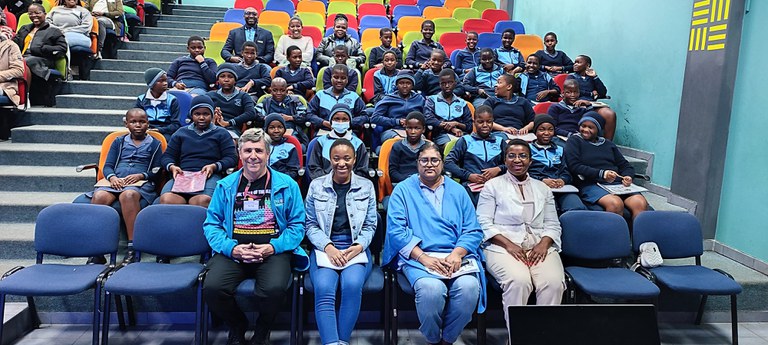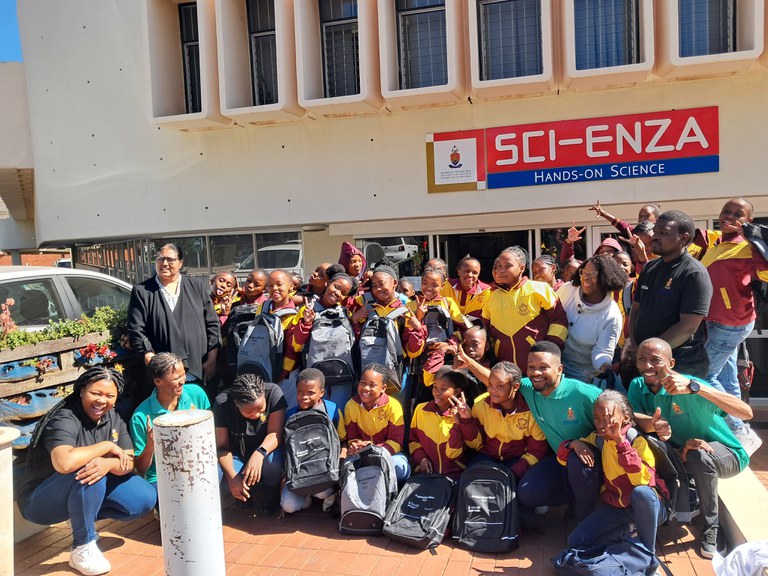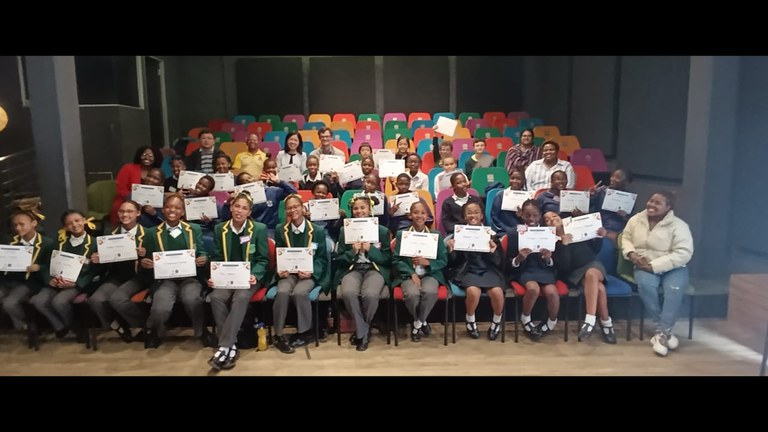
This project aims to create awareness of automation and control among 9 to15-year-old girls at rural and urban schools in South Africa as part of STEM education. This project aims to stimulate their passion for Control Engineering and encourage them to consider a career in STEM through workshops facilitated by the Science Center at the University of Zululand (UNIZULU) and SACAC. Female learners from the Zululand region and other parts of the country will be invited to a face-to-face workshop on Robotics and coding with Scratch. The workshop will also cover basic principles in the theory of Control.
Activity Organizer
Prof Syamala Krishnannair, Department of Mathematical Sciences, University of Zululand, South Africa; [email protected]
IFAC Sponsor: The South African Council for Automation and Control (SACAC; IFAC NMO for South Africa)
Description
The “Girls in Control” workshop aimed to inspire young girls aged 9 to 13 years in South Africa to explore Science, Technology, Engineering, and Mathematics (STEM) fields. Targeting this critical developmental stage, the workshop focused on breaking gender stereotypes, empowering girls, and introducing them to foundational STEM skills through hands-on activities. Its core objectives were to ignite curiosity, encourage problem-solving, and nurture creativity in a collaborative environment. The workshop featured interactive presentations, live demonstrations, coding sessions, and mentorship from accomplished women in STEM.
The initiative is particularly relevant in the context of South Africa’s need for control engineers, a profession in high demand due to the growing automation trends. Control Engineering, which blends Electrical, Computer, and Mechanical Engineering, is crucial for South Africa’s SET (Science, Engineering, and Technology) workforce, and this workshop helps bridge the gender gap by encouraging more female students to pursue SET careers. The program has targeted both rural and urban schools, with a focus on reaching girls aged 9 to 15 years, particularly from underrepresented areas.
In 2024, five workshops were held between 24 April and 22 October22 with financial and logistical support from both SACAC and IFAC. Three of these workshops took place at the UNIZULU Science Center in the Zululand region, while the other two were hosted at the Science Centres at the University of Pretoria and the Cape Town Science Center on 15 August and 10 October, respectively. The first session of each workshop introduced the concept of a feedback loop and demonstrated its real-world applications in control problems. The content, which covered control theory principles and practical examples, was originally developed by the International Federation of Automatic Control. To enhance accessibility, the material was translated into isiZulu and Sepedi, providing the girls with a clearer understanding of the exciting career opportunities in Control Engineering and related STEM fields.
The second session featured a science exhibition, science tour, coding with Scratch, and hands-on activities in a Robotics workshop, providing the girls with a hands-on introduction to Control Engineering. These interactive activities, including coding and exhibitions, sparked the girls’ interest and curiosity about STEM subjects. Many of them were previously unfamiliar with STEM fields, including Control Engineering.
The final session of the workshop featured motivational speeches from a group of accomplished women in STEM: Ms. Sethabile Madolo, an engineer at Anglo American; Dr. Veronica Allen, an astronomer from the Netherlands; Prof. Li, the Winokur Family Professor of Electrical Engineering and Applied Mathematics at Harvard University; Ms. Claire Lowry, a control engineer from Anglo American; and female control engineers from South32. These inspiring women delivered talks during sessions held in Zululand, Pretoria, and Cape Town, encouraging the girls to consider and pursue careers in STEM.