The Technical Committee 2.2 focuses on understanding phenomena and studying processes in which linearity plays a fundamental role. Even within this common perspective, the research areas encompassed are manifold, to the point that TC 2.2 Members have considered particularly effective to organize their activities in Working Groups (WGs)—communities of scientists sharing an interest in specific main research streams of the TC.
The initiative to structure TC 2.2 in the form of working groups dates back to 2007 (TC Annual Meeting at the 3rd IFAC Symposium on System Structure and Control, Foz do Iguassu, Brazil), with the creation of the first working group, which was focused on “Time-Delay Systems” (TDS). The second working group, entitled “Fractional Differentiation and Its Applications” (FDA) and covering the themes of fractional-order systems, was created in 2010 (TC Annual Meeting at the 4th IFAC Symposium on System Structure and Control, Ancona, Italy). Two other working groups were created in 2013 (TC Annual Meeting at the Joint 5th IFAC Symposium on System Structure and Control and 11th IFAC Workshop on Time Delay Systems, Grenoble, France)—namely, the working group on “Symbolic Computation Methods for Linear Functional Systems” (SymCo) and the working group on “Control of Complex Systems” (CoSy). Finally, the working group on “Linear Parameter-Varying Systems” (LPVS) was created in 2018 (TC Annual Meeting at the 14th IFAC Workshop on Time Delay Systems, Budapest, Hungary).
The role of the WG can be summarized as follows:
- to coordinate the research activities in the corresponding fields (in connection with TC 2.2 but not limited to it);
- to create the appropriate dynamics at the interfaces with other communities interested in such topics (Applied Mathematics, Physics, Mechanics, Biology, Medicine, Computer Sciences, Chemical Engineering,…) in order to create multidisciplinary & interdisciplinary research with real benefit at both ends.
An overview of the present structure, organization and topics of each of the five TC 2.2 Working Groups follows.
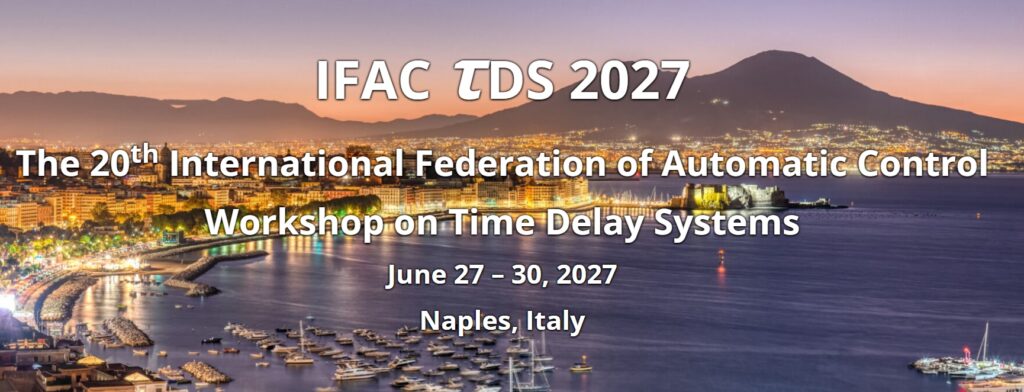
WG “Time Delay Systems” (TDS)
The focus of this WG is on all aspects concerning time-delay systems: modeling and identification, analysis, filtering and estimation, stability and stabilization, structural issues, robustness, approximation techniques and numerical issues, control schemes and application in process control, networked systems, communication, bioengineering, economics and other fields.
WG TDS is coordinated by:
- Wim MICHIELS (KU Leuven, Belgium): [email protected]
- Gabor OROSZ (University of Michigan, Ann Arbor, USA): [email protected]
WG “Fractional Differentiation and Fractional Order Systems” (FDA)
The focus of this WG is on the analysis and the control of fractional-order systems: representation of fractional order systems, stability conditions for commensurate fractional order systems, simulation and sampling methods for fractional-order systems, observability and controllability conditions for commensurate fractional-order systems, system identification methods, fractional-PID, low-order controllers and robust control methodologies, vibration insulations, filtering. Some challenges are the following: find the physical and geometrical meanings of the fractional derivative operators; find stability, observability, controllability conditions for non-commensurate fractional order systems; build a consistent theory of fractional quantum mechanics, fractional quantum field theory, fractional differential geometry; develop analysis on time-delay fractional order systems; extend the existing results to nonlinear fractional order systems; extend LQR and LQG control to fractional order systems; apply these results in the industrial framework.
WG FDA is coordinated by:
- Pierre MELCHIOR (University of Bordeaux, France): [email protected]
- Duarte VALÉRIO (University of Lisboa, Portugal): [email protected]
WG “Control of Complex Systems” (COSY)
The focus of the working group is on the study of structural properties of systems which consist of the interconnection of a number of basic components (subsystems) and are characterized by complexity due to one or more of the following features: uncertainty or lack of knowledge about the dynamics of the single components; uncertainty or variability of the interconnection topology; hybrid and/or heterogeneous nature of the involved sub-processes; possibility to implement different functioning, information and/or decision making structures in response to goals and operational requirements; necessity to operate in variable and/or uncertain environments; large dimensionality. Examples of Complex Systems in the above sense are Structure Evolving Systems and Systems of Systems. Applications are found in modeling and controlling natural processes in, e.g., biology, genetics, social sciences as well as man-made processes in engineering design, networks and communications, power distribution, management.
WG COSY is coordinated by:
- Corentin BRIAT (Switzerland): [email protected]
- Xiang CHEN (University of Windsor, Canada): [email protected]
WG “Symbolic Computation Methods for Linear Functional Systems” (SymCo)
In the recent past, symbolic computation methods have been largely employed by several groups of control theorists for studying structural properties and synthesis problems. Computer algebra packages have recently been developed to study linear control functional systems. In this framework, the aim of the working group is to gather world specialists in symbolic computation and control theory experts to promote both the development of theoretical methods and their application to relevant engineering problems.
WG SymCo is coordinated by:
- Eva ZERZ (RWTH Aachen University, Germany): [email protected]
- Alban QUADRAT (Inria Paris, France): [email protected]
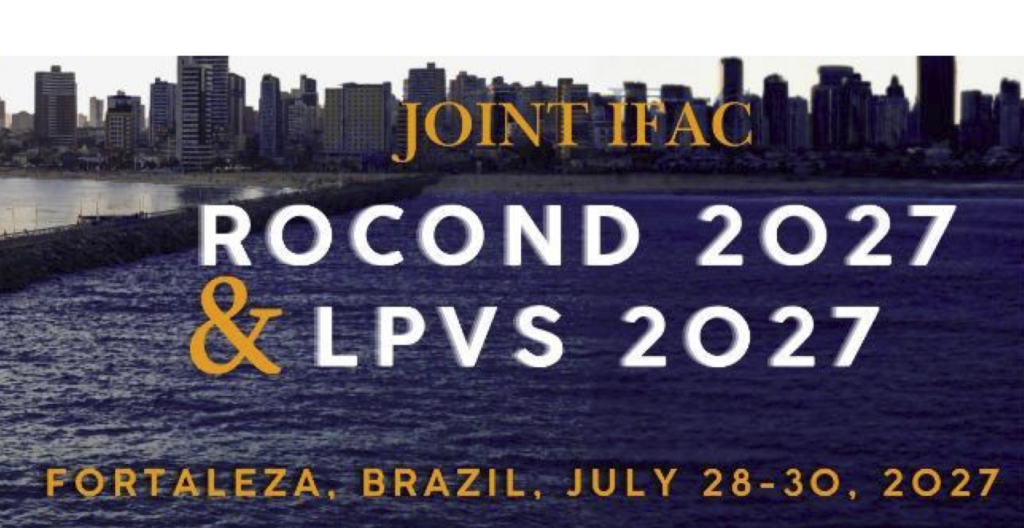
WG “Linear Parameter Varying Systems” (LPVS)
Linear Parameter Varying (LPV) systems are linear systems where the matrices depend on time-varying parameters. This class of systems allows representing several types of dynamical systems such as time-varying uncertain systems, nonlinear systems, switched systems, multi-models, etc. LPV modeling allows also the design of LPV controllers, where the controller gain parameters are updated according to the measurable plant varying parameters. This working group aims at presenting new results in the field of LPV systems and their applications in real life problems, including i) modeling and identification of LPV systems: In particular, how to obtain LPV models for nonlinear systems, switched systems, time-delay systems, sampled-data systems, systems with saturation, uncertain systems, polynomial systems; ii) analysis of LPV systems: stability and stabilization, robustness issues, geometric approaches, structural analysis; iii) observation and diagnosis of LPV systems: observer design, fault detection and isolation; iv) control of LPV systems: robust control, optimal control, predictive control, constrained control, fault tolerant control, virtual reference feedback tuning, sampled-data control, event and self-triggered control; v) applications of LPV modeling and control in automotive, aerospace, robotics, chemical processes, biological systems, energy and nuclear, network-controlled systems.
WG LPVS is coordinated by:
- Roland TOTH (Eindhoven University of Technology, Netherlands): [email protected]
- Olivier SENAME (Grenoble INP, France): [email protected]