Introduction
The Pan-African Robotics Competition (PARC) 2025, held July 17–19, 2025 in Saly, Senegal, brought together 265 participants from 19 countries to develop robotics and AI solutions addressing real-world African challenges. Under the theme “Industry 5.0,” the competition featured six leagues spanning middle school to professionals. Supported by IFAC and other partners, PARC promoted control systems, robotics, and AI education while fostering collaboration between academia, industry, and government. The event empowered youth with hands-on innovation experience and strengthened Africa’s pipeline of future engineers and technology leaders.
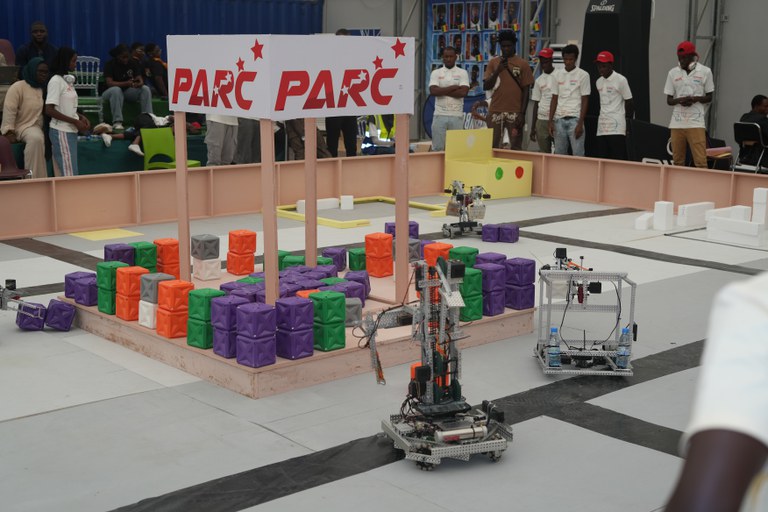
The Pan-African Robotics Competition (PARC) 2025 represented a major milestone in advancing STEM education, robotics innovation, and control systems applications across Africa. Organized in Saly, Senegal, from July 17–19, 2025, the event was the culmination of several months of preparation, during which teams from across the continent designed, built, and tested their robotic systems.
Project Details
- Project Lead: Prof. Mamadou Diagne, Univ. of California, San Diego, U.S.A.; [email protected]
- IFAC Sponsor: TC 2.6 Distributed Parameter Systems
- Location: Saly, Senegal
- Event Date: July 17–19, 2025
Scope and Participation
PARC 2025 brought together 265 participants from 19 countries, including Senegal, Ghana, Nigeria, Uganda, Kenya, Tanzania, Zimbabwe, Liberia, Côte d’Ivoire, Niger, and others. Participants ranged from middle school students to university students and professionals, reflecting a comprehensive pipeline approach to STEM education.
The competition was structured into six leagues:
- Tech League (Middle School): Resource Extraction
- Stars League (High School): Battery Manufacturing
- Makers League (High School): Security in Industry 5.0
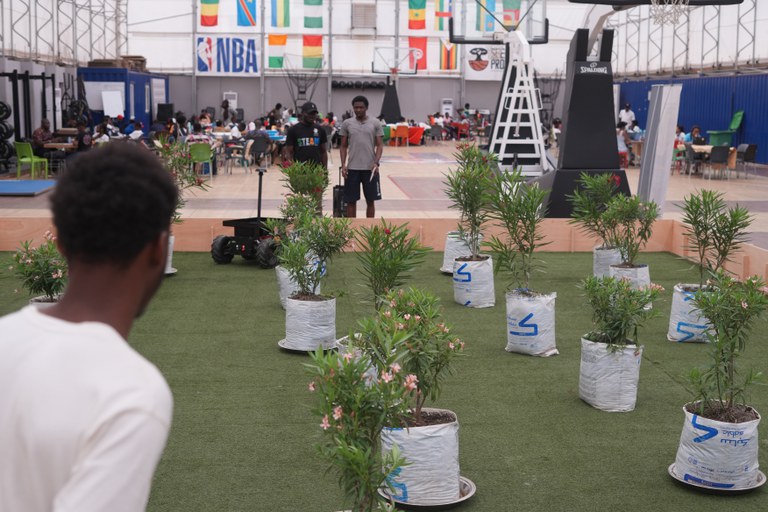
- Engineers League (University & Professionals): Precision Agriculture (Autonomy & Design Tracks)
- AI League (Professionals): AI and Mining
Each league addressed real-world challenges aligned with Africa’s development priorities.
Integration of Control Systems (IFAC Contribution)
A key highlight of PARC 2025 was the integration of control systems engineering, particularly within the Engineers League. Participants developed advanced robotic systems incorporating:
- Autonomous navigation
- Feedback control systems
- Sensor integration and real-time decision-making
These systems were applied to precision agriculture, enabling innovations such as targeted fertilizer application and efficient resource utilization. The projects demonstrated the practical importance of control theory in solving real-world problems and aligned strongly with IFAC’s mission.
Innovation and Outcomes
Participants simulated solutions directly addressing African challenges, including:
- Improved resource extraction techniques
- Safer and more efficient battery manufacturing processes
- Security systems for Industry 5.0 environments
- AI-driven mining systems
- Precision agriculture robots for smallholder farmers
Winning teams demonstrated exceptional technical capability and creativity:
- The DAUST Robotics Club (Senegal) excelled in control-based agricultural robotics
- RobotsMali achieved multiple awards for innovation and performance
- Teams from Madagascar and Tanzania led advancements in AI-driven mining
These outcomes illustrate the emergence of a new generation of African engineers capable of developing globally competitive technologies.
Capacity Building and Impact
Beyond the competition, PARC 2025 served as a platform for:
- Hands-on engineering education
- Mentorship from international experts and diaspora scientists
- Exposure to industry standards and expectations
Participants gained practical experience in robotics, AI, and control systems, significantly enhancing their technical skills and career readiness.
Ecosystem Development
PARC successfully fostered collaboration among:
- Academia (universities and schools)
- Industry (technology companies and startups)
- Government and policymakers
The event included interactions where students presented their solutions to decision-makers, bridging the gap between innovation and implementation. This aligns with IFAC’s broader goal of connecting research, industry, and societal impact.
Long-Term Impact and Sustainability
PARC continues to grow as a continental platform for innovation. The 2025 edition reinforced:
- Africa’s capacity in robotics and control systems
- The importance of early STEM engagement
- The role of competitions in driving innovation ecosystems
Future editions aim to expand participation, deepen industry partnerships, and further integrate advanced control systems and AI technologies.